Whole-Home Renovation in Buda, TX: Costs & Process 2026
A down-to-studs whole-home renovation in Buda generally runs $150,000–$250,000 for a 1,800–2,200 sq ft house kept in its existing footprint, $250,000–$450,000 when walls move and the kitchen and baths are rebuilt from scratch, and $450,000+ when you add square footage or custom cabinetry throughout. Construction takes 4 to 8 months, with design and permitting finished before anyone swings a hammer. We give you one contract, one schedule and one fixed price in writing before demolition starts.
Already planning a whole-home renovation? Get a real price for your house →
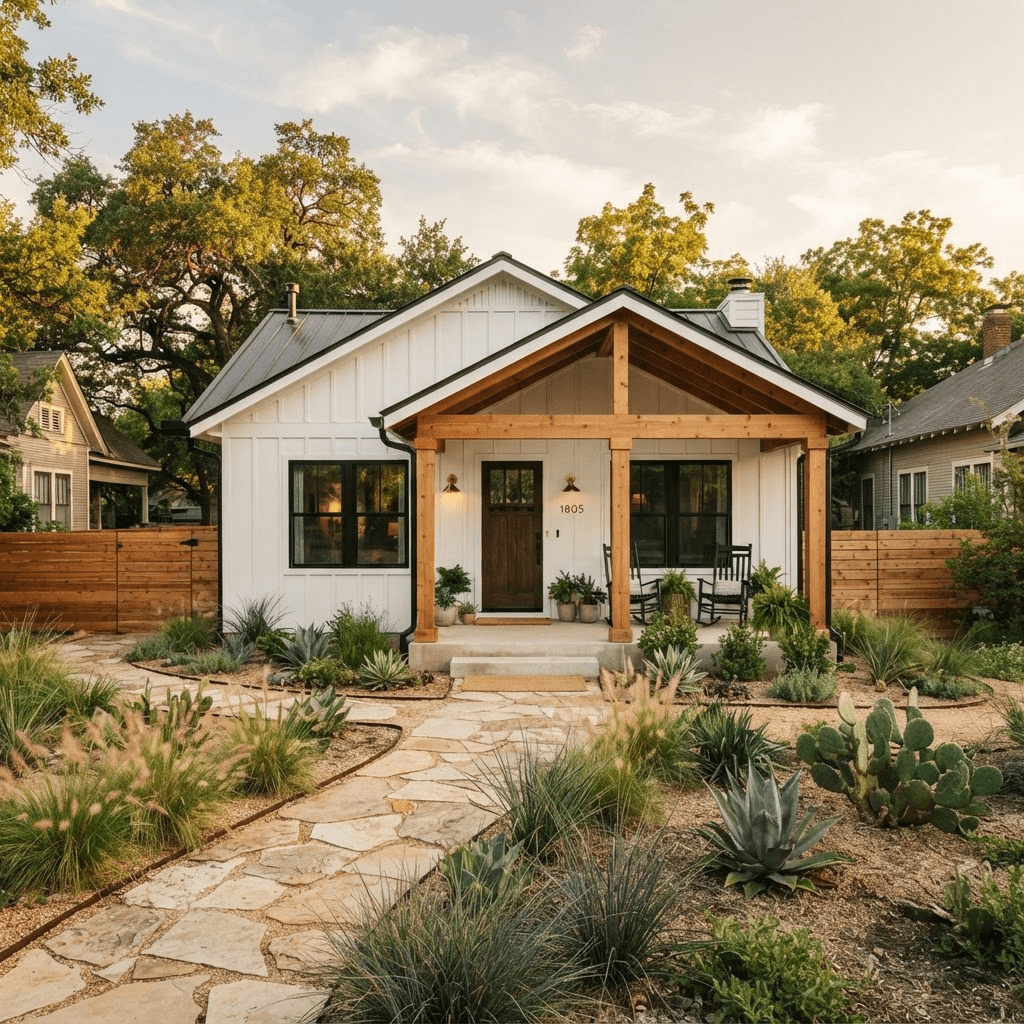
What a Whole-Home Renovation Costs in Buda
Whole-home numbers move with square footage, how far the layout changes, and finish level. The ranges below assume a typical Buda single-family house on a slab, between roughly 1,800 and 2,600 square feet. Larger houses scale up; a 3,200 sq ft two-story taken to the studs lands at the top of these bands or above them.
Inside a whole-home budget, the kitchen is usually the single largest line. Our published Austin-area kitchen ranges apply here: $45k–$70k for a refresh in the existing footprint with new cabinets, counters, lighting and fixtures; $70k–$110k when the layout opens up and plumbing moves; $110k+ for a high-end kitchen taken down to the studs with custom cabinetry and high-end appliances. Bathrooms, flooring, windows, HVAC, electrical and paint fill out the rest.
- $150k–$250k — full cosmetic rebuild in the existing footprint: all flooring, paint, trim, doors, lighting, new kitchen in place, two baths rebuilt, HVAC and electrical updates as needed.
- $250k–$450k — down to the studs: interior walls reconfigured, kitchen relocated or opened up, plumbing rerouted, new windows, new HVAC system, primary suite rebuilt, upgraded finishes throughout.
- $450k+ — renovation plus added square footage, custom cabinetry in every room, high-end appliances, specialty windows, outdoor living tied into the project.
- Moves the price up: moving plumbing fixtures, adding square footage, two-story work, custom cabinetry, replacing all windows, upgrading the electrical service, structural changes an engineer has to design.
- Moves the price down: keeping the kitchen and bath fixtures where they are, semi-custom cabinets, reusing existing windows, phasing outdoor living to a later contract, keeping the existing HVAC layout.
What Is Particular About Renovating in Buda
Most of Buda's housing stock is subdivision construction from the late 1990s through the 2010s, built south along I-35 and out toward FM 967 and FM 1626. These houses are usually slab-on-grade, framed with builder-grade trim, hollow-core doors, carpet over most of the floor plan and a kitchen boxed off from the living room. That is a good candidate for a down-to-studs renovation: the shell is sound construction and the money goes into layout, cabinetry, windows and systems rather than rot repair.
Older houses near downtown Buda are a different job. Smaller rooms, pier-and-beam or early slabs, original wiring and plumbing that has been patched over decades, and additions done by previous owners with no drawings. We open walls and ceilings early on these to find out what is actually there before the fixed price is set, and we budget contingency lines for what nobody can see from the driveway.
Two Central Texas realities shape the work. Clay soils move with our wet-dry cycles, so if there is foundation movement we bring in a licensed engineer to evaluate it and write the scope — that judgement is theirs, not ours, and we build to their drawings. And summer heat makes attic work and insulation worth doing while the walls are open: air sealing, duct replacement and insulation upgrades cost far less during a studs-out renovation than they do as a standalone job later.
- Newer slabs in Buda subdivisions are often post-tension, which affects how plumbing is rerouted — an engineer and the plan reviewer determine what is allowed before we price it.
- Kitchen islands and open layouts usually mean new electrical home runs and a panel review; 1990s and early-2000s panels often need upgrading to carry a modern kitchen.
- Window replacement on west-facing elevations pays for itself in comfort more than anything else you can spend the same money on.
- If you are on a well or septic outside the city limits, fixture count changes get reviewed before the plans go forward.
Permits and Inspections for a Buda Address
Permitting depends on where your address sits. Houses inside the Buda city limits are reviewed by the City of Buda; houses in unincorporated Hays County go through the county's process, which also covers septic where it applies. Some addresses with a Buda mailing address fall under City of Austin review. We confirm the jurisdiction at the first visit by the parcel, not the mailing address, and we handle the permit package either way — drawings, applications, submittals, revisions and scheduling inspections.
Expect permit and review fees on a whole-home package to run in the low thousands, with more on projects that add square footage. Those fees are set by the jurisdiction, and they are carried as a line in your contract so nothing lands on you mid-project.
On structural questions — removing a wall, changing a roof line, adding an opening — a licensed structural engineer produces the drawings and the permit office approves them. We do not make those calls, and no one should tell you a wall can come out before an engineer has looked at it. Plan review and inspections happen in a fixed sequence, and we build the schedule around them rather than hoping they fit.
- Typical inspection sequence: rough plumbing and any slab work, rough electrical and mechanical, framing, insulation, then final.
- Drawings go in after design is locked, not during construction — changes after submittal mean resubmittal and lost weeks.
- Expect 4–8 weeks for review on a whole-home package; we run cabinet shop drawings and material procurement in parallel so that time is not dead time.
- Deed restrictions and HOA architectural review apply in many Buda subdivisions and are separate from the permit — budget time for both if you are changing the exterior.
The Timeline, First Visit to Final Walkthrough
A whole-home renovation is 4 to 8 months of construction, and it is preceded by two to three months of design and permitting. Anyone who tells you demolition can start next week is planning to design your house while they build it, and that is how budgets and schedules come apart.
Here is the sequence we run. We do not promise start dates before a contract is signed and permits are in hand; we promise the duration we will build to once they are.
- Weeks 1–2: first visit and walkthrough. We measure, look at the panel, the attic, the slab and the plumbing, and talk about what you want the house to do.
- Weeks 2–6: design. Floor plans, elevations, selections started, engineering engaged if the layout changes. You see the plan before you see a number.
- Weeks 6–10: fixed price in writing. Full scope, allowances resolved into real selections, line by line. You sign one contract covering the whole house.
- Weeks 8–16: permitting and procurement. Plans submitted, cabinets ordered, long-lead windows and appliances locked in. Overlaps with the end of design.
- Weeks 16–20: demolition and rough-in. Interior taken to the studs, plumbing, electrical and HVAC rough, framing changes per the engineer's drawings, rough inspections.
- Weeks 20–36: insulation, drywall, trim, cabinetry, tile, counters, flooring, paint. This is the longest stretch and where in-house carpenters keep the schedule honest.
- Weeks 36–44: fixtures, appliances, final inspection, punch list, final walkthrough. Longer on larger houses or where square footage was added.
How Our Fixed-Price Design-Build Process Works
One contract covers design, permitting and construction. You are not coordinating an architect, a general contractor and three subs who each blame the other two. We produce the drawings, we handle the permit package, our own carpenters frame and trim the house, and we run the trades on a schedule we published before demolition.
The price is fixed in writing before work starts, after selections are made — not an estimate, not a range that drifts. The only thing that changes it is a change you ask for, priced and signed before it is built. Workmanship carries a 5-year warranty. Financing is available if you would rather not pay out of savings in one block.
On a whole-house job, living arrangements matter. Most Buda families move out for a studs-out renovation; it is faster, cleaner and safer than living in two rooms with no kitchen for five months. If you plan to stay, say so during design, because phasing the house in halves adds weeks and changes the price, and we would rather build that into the schedule than argue about it in month three.
What to Ask Any Contractor Before You Sign
A whole-home renovation is the biggest single contract most homeowners ever sign on their house. Ask these questions of everyone you talk to in Buda, including us, and compare the answers rather than the first number you hear.
Then do these three things: walk your house room by room and write down what each room fails at today; pull your HOA architectural guidelines if you have an HOA; and get a design conversation on the calendar before you get a price, because a price without drawings is a guess.
- Is the number you are giving me a fixed price or an estimate, and what specifically would change it?
- Who handles the permit submittal and the inspections, and which jurisdiction reviews my parcel?
- If the layout changes, who produces the structural drawings and who stamps them?
- Are the framers and trim carpenters your employees or subcontracted?
- What is the written construction duration, and what is the sequence of inspections inside it?
- What does the workmanship warranty cover, for how long, and who answers the phone in year four?
- How are allowances handled — are selections resolved before signing, or carried as placeholder numbers?
Buda homeowners also ask
How long will a whole-home renovation in Buda take?
Construction is 4 to 8 months depending on size and how much of the layout changes. Add roughly 6–10 weeks for design and 4–8 weeks for permit review ahead of demolition. Design and permitting are finished before demo starts, so the construction calendar we hand you is the one we build to.
Do I need a permit, and who pulls it?
We handle the permit package — drawings, submittal, revisions and inspection scheduling. Whether your address is reviewed by the City of Buda, Hays County or the City of Austin depends on the parcel, and we confirm that at the first visit. Whether a specific scope is permitted is the permit office's determination, not something we or any contractor decide for you.
Can I take the wall between my kitchen and living room out?
That is a question for a licensed structural engineer and the permit office, and we engage an engineer during design to answer it. If the opening is approved, the engineering and the framing work are priced into the fixed contract before demolition. Opening up a kitchen layout is also what moves a kitchen from the $45k–$70k band into the $70k–$110k band.
Should I move out during the renovation?
For a down-to-studs whole-house job, most Buda families do. There is no kitchen, limited plumbing and daily dust for months. If you need to stay, tell us during design — we can phase the house in halves, but it adds weeks to the schedule and changes the price, and both need to be in the contract rather than discovered later.
Check it with Buda’s own pages
Permit rules and fees change, and the office that issues the permit is the authority on them, not this guide. These are its pages.