Whole-Home Renovation in Hutto, TX: 2026 Cost Guide
A whole-home renovation in Hutto generally runs $150,000–$250,000 for a cosmetic reset inside the existing footprint, $250,000–$450,000 once walls move and plumbing, HVAC and electrical are reworked, and $450,000+ for a down-to-studs rebuild with custom cabinetry, high-end appliances and added square footage. Plan on 4 to 8 months of construction, with design and permitting finished before demolition starts. You get one contract, one schedule and one fixed price in writing before anyone swings a hammer.
Already planning a whole-home renovation? Get a real price for your house →
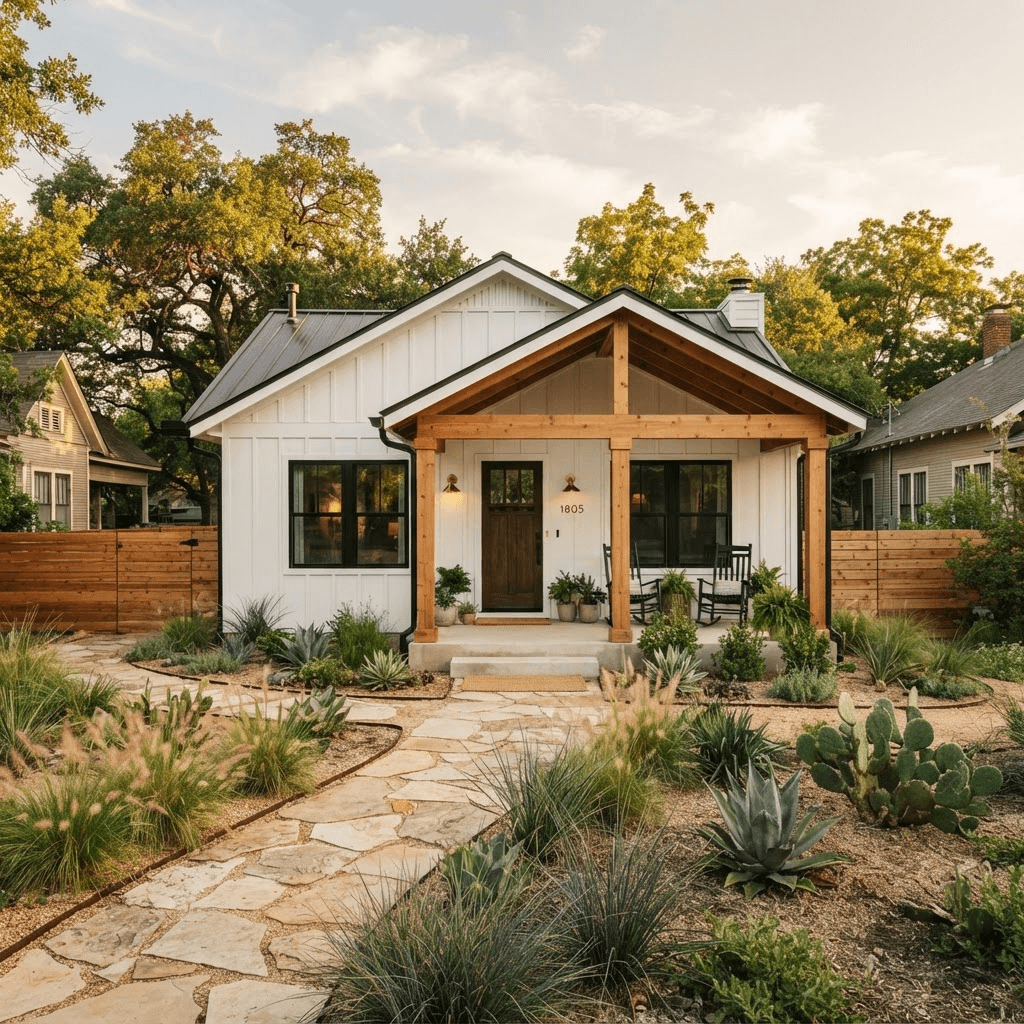
What a whole-home renovation costs in Hutto
Whole-home pricing is driven by three things: how much square footage you touch, whether the floor plan changes, and the level of finish. A 2,200 sq ft Hutto house that keeps its layout and gets new flooring, paint, trim, lighting, cabinets, counters and fixtures lands in a very different place than the same house taken to the studs with a reworked kitchen wall and two bathrooms moved.
Kitchens and bathrooms carry most of the budget. Our published Austin-area kitchen ranges are $45k–$70k for a refresh in the existing footprint with new cabinets, counters, lighting and fixtures; $70k–$110k when the layout opens up and plumbing moves; and $110k+ for a high-end kitchen taken to the studs with custom cabinetry and high-end appliances. Bathrooms, flooring, windows, HVAC and electrical stack on top of that. When we scope a whole house, we price every room that way and then give you one number for the whole contract.
Three bands to plan around for a typical Hutto single-family home:
- $150k–$250k — finish-level renovation in the existing footprint: flooring throughout, paint, trim and doors, kitchen refresh, one or two bathrooms, lighting and fixtures, no walls moved.
- $250k–$450k — down-to-studs on the main living areas: kitchen opened up, plumbing relocated, new electrical and HVAC distribution, two to three bathrooms rebuilt, new windows, upgraded insulation.
- $450k+ — full gut of the whole house with custom cabinetry, high-end appliances, a primary suite reconfiguration, and often an addition or a garage conversion folded into the same contract.
- What moves you up a band: moving plumbing and gas, a second story, custom millwork, large-format tile and stone slabs, replacing the full window package, upsizing the electrical service, and anything an engineer specifies after reviewing the house.
- What keeps you at the low end: keeping kitchen and bath plumbing where it is, stock or semi-custom cabinets, quartz instead of natural stone, keeping existing windows, and phasing the detached garage or outdoor work into a later contract.
What's particular about renovating a Hutto house
Hutto's housing stock splits roughly in two. Around the older core near Front Street there are smaller, older homes where the surprises live behind the walls — original wiring, cast iron or galvanized drain lines, undersized panels, and insulation that stopped doing its job years ago. In the subdivisions that filled in along US 79 and east toward SH 130 from the 2000s onward, the bones are newer but the layouts are builder-grade: closed-off kitchens, a tub in the primary bath nobody has used in a decade, and too few outlets for how people actually live.
Both types are usually slab-on-grade. That matters because anything that moves a toilet, a shower drain or a kitchen sink means cutting and re-pouring concrete, then re-tying into the existing drain line. We price slab work as its own line so you can see exactly what the layout change is buying you — and so you can decide to keep a fixture where it is if the number isn't worth it to you.
Central Texas clay soil moves with the seasons, so we look at door and window operation, slab cracks and trim gaps during the first visit. If anything suggests movement, a licensed engineer evaluates it and specifies what happens next; that is their call, not ours, and we price to their report rather than guessing. The same goes for any wall you want gone — the engineer and the permit office decide what is possible and what support is needed.
Climate drives the rest of the scope. Long 100-degree summers and the occasional hard freeze mean a gut renovation is the right moment to deal with attic insulation, duct leakage, exterior wall insulation where walls are already open, and pipe protection in exterior walls and attics. Doing it while the drywall is off costs a fraction of doing it later.
Permits and inspections in Hutto
Permitting depends on your address. Homes inside Hutto city limits are permitted and inspected by the City of Hutto; properties outside the city limits fall under Williamson County and, for septic or on-site wastewater, the county's environmental review. We confirm your jurisdiction from the address and the appraisal district record before we draw anything.
A whole-home renovation usually involves a building permit plus electrical, plumbing and mechanical trade permits, with inspections at rough-in and again at final. If your home sits in a subdivision with an HOA or architectural review, exterior changes — windows, doors, roofline, an addition — typically need their approval as well, and that review runs in parallel with the city or county submittal.
We handle the permit applications, the drawings, the engineer coordination and the inspection scheduling. Permit and plan review fees are not a guess on our contracts; they are carried as a specific line item in the fixed price so there is no true-up later. Expect permit and review fees on a whole-home project to land in the low thousands, with engineering and survey work priced separately if the scope calls for it.
Two things to be honest about: review times are set by the office, not by us, so we build the submittal window into the schedule rather than promise a date; and anything discovered during rough-in inspection that the inspector wants corrected gets corrected. That is what the inspection is for.
The timeline, week by week
Construction on a whole-home renovation runs 4 to 8 months. The calendar before construction is just as real, and we would rather you see it up front than be surprised by it. Here is how a typical Hutto project sequences from first visit to final walkthrough.
Most Hutto homeowners move out for a full gut. If you plan to stay in part of the house, say so at the first visit — it changes the phasing, the dust containment and the schedule, and we price it that way from the start rather than renegotiating in month three.
- Weeks 1–2: first visit, measure, scope conversation, budget bands. You find out early whether your wish list and your number are in the same neighborhood.
- Weeks 2–8: design and selections. Floor plans, elevations, cabinet layouts, tile, counters, fixtures, appliances. Engineering if the scope needs it.
- Weeks 6–12: permit submittal and review with the City of Hutto or Williamson County, plus HOA review if it applies. Long-lead items — windows, cabinets, appliances — get ordered here.
- Weeks 10–16: fixed price signed, construction schedule issued, material staging.
- Construction weeks 1–3: demolition, haul-off, structural work per the engineer's drawings.
- Construction weeks 3–8: rough plumbing including any slab work, electrical, HVAC, framing changes, windows and exterior work, then rough-in inspections.
- Construction weeks 8–14: insulation, drywall, trim and interior doors, paint.
- Construction weeks 12–22: cabinets, counters, tile, flooring, fixtures, appliances. Bathrooms generally finish in 3–5 weeks each once they start; kitchens 6–10 weeks.
- Final 2–4 weeks: final inspections, punch list, cleaning, walkthrough, warranty paperwork.
How our fixed-price design-build process works
One contract covers design, permitting and construction. You are not managing an architect, a separate general contractor and three trade companies who each blame the others when something lands wrong. Our carpenters are in-house, which is why framing, trim and cabinet installation stay on schedule instead of waiting on a sub with a better-paying job across town.
Design and selections are finished before demolition. Every cabinet, tile, fixture and appliance is chosen and priced, then the fixed price is issued in writing. From that point the number moves only if you change the scope or if an inspector or engineer requires work nobody could see behind the drywall — and those are written as signed change orders with a price before the work happens, not added to an invoice afterward.
Workmanship is covered by a 5-year warranty. Financing is available if you would rather not pull the full amount out of savings at once. Payments are tied to completed milestones on the schedule you were handed, so you always know what you paid for.
What to ask any contractor — and what to do next
Whole-home work is the largest contract most homeowners ever sign. Before you sign anything, get straight answers to these.
When you are ready, send us your address, the approximate square footage, the year the house was built, and a short list of what you want changed room by room. We will walk the house in Hutto, tell you which band your project lands in, and put a fixed price in writing before any work starts.
- Is this a fixed price or an estimate that gets reconciled later? Ask to see how change orders are written and approved.
- Which jurisdiction permits my address — City of Hutto or Williamson County — and who files the applications and schedules inspections?
- Who is doing the framing, trim and cabinet installation: your own crew or a sub?
- What is the construction schedule by phase, and what happens to it if a long-lead item is delayed?
- What does the workmanship warranty cover, for how long, and who answers the phone in year three?
- How are allowances handled for tile, counters and fixtures — or are selections finalized and priced before demolition?
- If the engineer's report or an inspection adds scope, how is that priced and approved?
Hutto homeowners also ask
Can I live in my Hutto house during a whole-home renovation?
For a true down-to-studs renovation, most homeowners move out. Water, power and HVAC go offline in sections, and dust travels. If you need to stay, we can phase the house — finish one wing, then move to the next — but phasing adds weeks to the schedule and cost to the contract, so we price it that way from the first visit instead of adjusting later.
Can I open up the kitchen wall in my Hutto home?
Often yes, but that is not our call to make from a walkthrough. A licensed engineer evaluates the house and specifies what support is needed, and the permit office reviews and approves the plan. We bring the engineer in during design, price the work to their drawings, and handle the permit submittal and inspections for you.
How much of a whole-home budget goes to the kitchen?
Usually the largest single share. A refresh in the existing footprint runs $45k–$70k, opening the layout and moving plumbing runs $70k–$110k, and a high-end kitchen to the studs with custom cabinetry and high-end appliances starts at $110k. On a $250k–$450k whole-home project, the kitchen commonly accounts for a quarter to a third of the total.
Do older Hutto homes near downtown cost more to renovate?
Often, yes. Older homes tend to need full electrical rewiring, drain line replacement, panel upgrades and insulation that newer subdivision homes already have, and those items are priced into the contract before demolition rather than discovered mid-job. We open up test areas and review the house in detail during design so the fixed price reflects what is actually behind the walls.
Check it with Hutto’s own pages
Permit rules and fees change, and the office that issues the permit is the authority on them, not this guide. These are its pages.